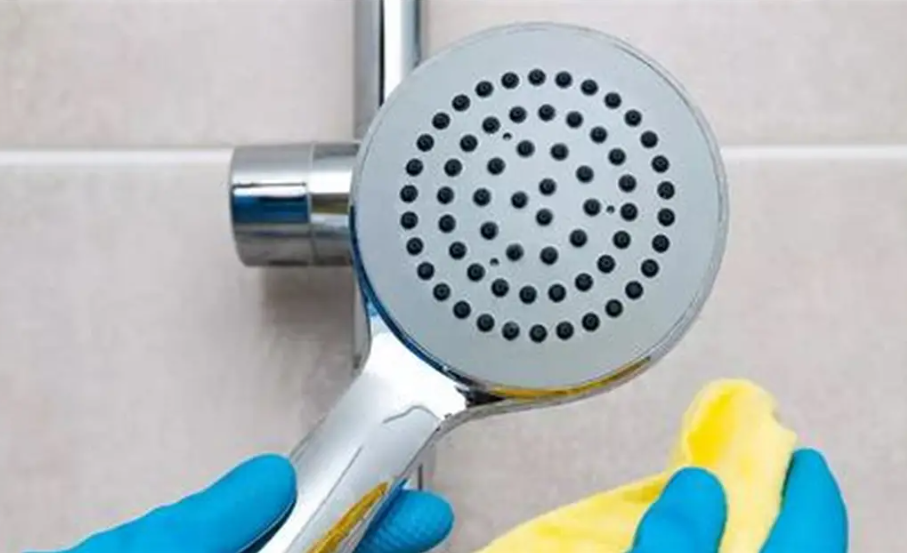
A shower can go from refreshing to frustrating when some of the spray jets start shooting sideways or the water pressure drops. The culprit is often mineral buildup from hard water — and you can usually clear it without poking at the nozzles or scratching the finish.
It may be tempting to reach for a needle, knife, or toothpick to unclog the tiny holes. I used to think that was the obvious fix, too, until I realized that sharp tools can damage a showerhead that would otherwise be easy to clean.
Why Is My Showerhead Spraying Unevenly?
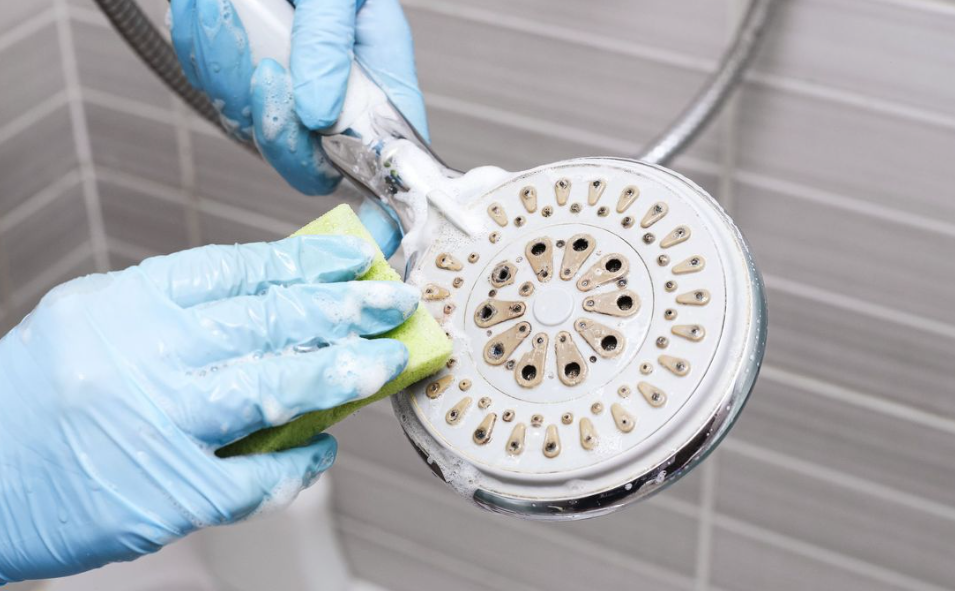
If the spray becomes irregular, some nozzles stop flowing, or you notice a white or grayish ring around the holes, mineral deposits are a likely cause. Hard water contains dissolved minerals, including calcium and magnesium. As water evaporates from the showerhead, these minerals remain behind and gradually build up.
At first, the residue may look like a light film that wipes away easily. Over time, it can harden and clog the spray nozzles. That’s why many people eventually search for how to clean a showerhead with hard water buildup.
Mineral deposits aren’t the only possible cause. Rust particles, sand, or debris from plumbing work can also collect in the showerhead. If you see reddish-brown residue and the water pressure drops at several faucets around the house, check the faucet aerators and plumbing as well.
Why You Shouldn’t Use a Needle or Knife
The spray nozzles on many showerheads are made of silicone, plastic, or thin metal with a decorative finish. A needle can puncture a silicone nozzle, widen a hole, or change its shape. Even a small change can affect the direction of the spray.
This is especially worth keeping in mind with modern showerheads that have flexible silicone nozzles. You can often rub them gently with your fingers to loosen some of the buildup.
Avoid steel wool, abrasive powders, and razor blades, too. They can leave tiny scratches on chrome and plastic. Mineral deposits may then cling to the damaged areas more easily, and the showerhead may become harder to keep clean.
How to Clean a Showerhead Without Removing It
A plastic bag makes it easy to clean a fixed showerhead without taking it off the wall. The cleaning solution stays in contact with the spray nozzles instead of running down the shower wall.
You’ll need:
⦁ White distilled vinegar or a citric acid solution
⦁ A sturdy plastic bag large enough to fit around the showerhead
⦁ A rubber band or twist tie
⦁ A soft toothbrush or sponge
Pour enough solution into the bag to cover the nozzles. Carefully position the bag around the showerhead so the spray face is submerged, then secure it to the shower arm with a rubber band or twist tie. Make sure it’s stable and won’t spill.
Vinegar is a popular way to remove limescale from a showerhead because its acidity can help dissolve mineral deposits. However, don’t leave it soaking for a long time without checking, especially if the showerhead is chrome-plated, painted, or made of plastic. Start with a 30- to 60-minute soak, then remove the bag and rinse the showerhead thoroughly.
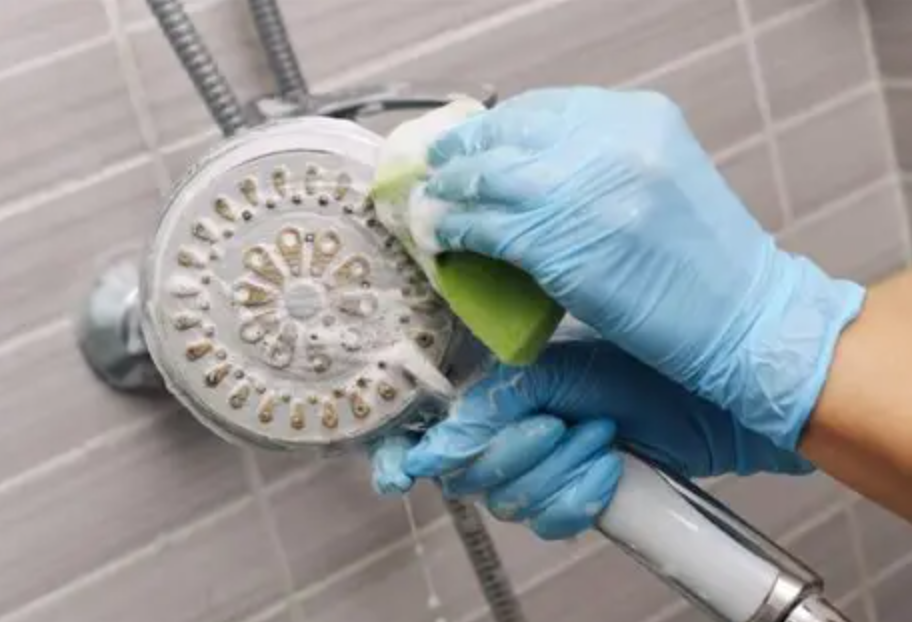
Turn on the hot water for a few minutes to flush loosened debris from the internal channels. If residue remains on the outside, gently brush it with a soft toothbrush or wipe it with a sponge. There’s no need to scrub hard — the softened buildup should come away more easily.
How to Clean a Showerhead with Citric Acid
Citric acid is another effective option for ordinary mineral buildup, and it usually has a milder smell than vinegar. Dissolve the powder in warm — not boiling — water. The amount you need depends on how much water you’re using and how severe the buildup is, so follow the instructions on the product label when available.
If you can remove the showerhead, place it in a bowl deep enough to cover the spray nozzles. If it’s fixed in place, use the plastic-bag method instead. Soak for about 30 to 60 minutes, then rinse the showerhead thoroughly.
Avoid boiling water. It can damage plastic parts, seals, and some decorative finishes. Warm water is enough to dissolve the citric acid without exposing the showerhead to unnecessary heat.
If your showerhead has multiple spray settings, test each one after cleaning. Buildup can collect inside the selector as well as around the nozzles. If the spray is still uneven, remove the showerhead if possible and check the washer, filter screen, and connection to the hose.
When to Avoid Vinegar and Citric Acid
Vinegar and citric acid aren’t suitable for every showerhead. If yours has a specialty finish — such as matte black, gold-colored, or another decorative coating — or you’re unsure what it’s made of, check the manufacturer’s care instructions first. Some finishes can be damaged even by mild acids.
If acids aren’t recommended, use a commercial limescale remover specifically labeled as safe for bathroom fixtures. Follow the product directions, wear gloves, and never mix cleaners. In particular, never mix acids with bleach or products containing chlorine, as this can release hazardous fumes.
Baking soda is sometimes suggested as an all-purpose cleaner, but it may not be the best choice for a shiny showerhead. When used as a paste, it acts as a mild abrasive and can leave scuffs on glossy finishes. For chrome, a soaking solution is generally a better choice than scrubbing with a paste.
How to Prevent Showerhead Buildup
It’s difficult to prevent mineral deposits entirely, especially if you have hard water, but regular upkeep can keep the nozzles from getting badly clogged.
⦁ Wipe the showerhead with a dry cloth after showering to remove water droplets.
⦁ Check the spray nozzles every few weeks and gently wipe them with a damp cloth.
⦁ Remove any white residue as soon as you notice it.
⦁ Consider a whole-home water filter or a filtered showerhead if hard water is a persistent problem.
A water filter may reduce mineral buildup on shower fixtures, shower doors, and faucets, although it won’t eliminate the need for occasional cleaning.
You don’t always need a new showerhead — or a sharp tool to poke every nozzle. Often, a short soak gives the cleaning solution time to loosen the deposits for you. What do you use when your showerhead starts spraying in every direction?