A quick trip to the kitchen for a cup of tea can turn into a mood-killer when you spot the sink. A couple of dirty dishes somehow become a whole pile: a mug after breakfast, a pot after lunch, then a skillet and cutting board at the end of the day. I used to tell myself I’d deal with it “later,” but later almost always turned into the most unpleasant chore of the day.
The problem wasn’t that I disliked cleaning or lacked discipline. Once I changed the order of a few steps — and stopped expecting myself to make the entire kitchen spotless in one go — dirty dishes became much less stressful. Here are the habits that make washing dishes faster and easier.
Why a Sink Full of Dishes Feels So Overwhelming
It’s not just the washing that wears us down; it’s the feeling that the task will never end. A greasy skillet needs soaking, plates have to be washed on both sides, glasses need a rinse, and a pot may need scrubbing. Your brain anticipates a long, tedious job, so it’s easy to turn away and leave everything for later.
But dirty dishes rarely get easier to clean on their own. Food dries onto plates, grease hardens, and odors can build up. A few hours later, the same dishes may take noticeably longer to wash. The real goal isn’t to heroically conquer a mountain of dishes — it’s to stop one from forming in the first place.
I remind myself that a clean sink isn’t proof of being a perfect homemaker. It’s simply one way to make the kitchen feel calmer. With a clear sink, it’s easier to cook dinner, fill a glass of water, rinse vegetables, and move around without feeling hemmed in by chores.
Try the One-Sponge Rule
When there’s a lot to wash, I don’t tell myself I have to finish everything in one go. I add a little dish soap to a sponge and wash as many items as I can while it’s producing a good lather. Once the suds are gone, I take a break: rinse my hands, put the kettle on, answer a message, or sit down for a few minutes.
It may seem like a small change, but it makes a big task feel more manageable. Instead of facing one long chore, you’re tackling a series of short, straightforward steps. Often, getting through the first small batch makes it easier to keep going. And if you stop there, at least some of the dishes are done and the sink looks less overwhelming.
This approach is especially helpful after a family dinner or a cooking project that leaves behind lots of bowls, knives, and pots. You don’t have to turn the evening into a deep-cleaning session. Work in short stretches and restore order without wearing yourself out.
How to Wash Dishes Faster After a Meal
The easiest time to deal with dishes is soon after eating. There’s no need to jump up from the table with a plate in your hand — you can finish your meal, talk with your family, and take a break. But try to clear away food scraps within the next few minutes.
At the very least, rinse plates and utensils with warm water. It only takes a moment, and it helps keep sauce, oatmeal, batter, and grease from drying onto the surface. When you come back to wash them, you’ll be able to use a sponge instead of scrubbing hard.
If you have a dishwasher, make it a household habit to load dishes as soon as you’re done with them. If you don’t, place a large plastic basin in or beside the sink. It’s a handy spot for dishes you can’t wash right away. Add warm water to help loosen residue, and your counter stays clear while food is less likely to dry into a hard crust.
Don’t leave wooden spoons, cutting boards, or knives with wooden handles soaking in water. Wood can absorb moisture, warp, or crack. Wash these items promptly and dry them well.
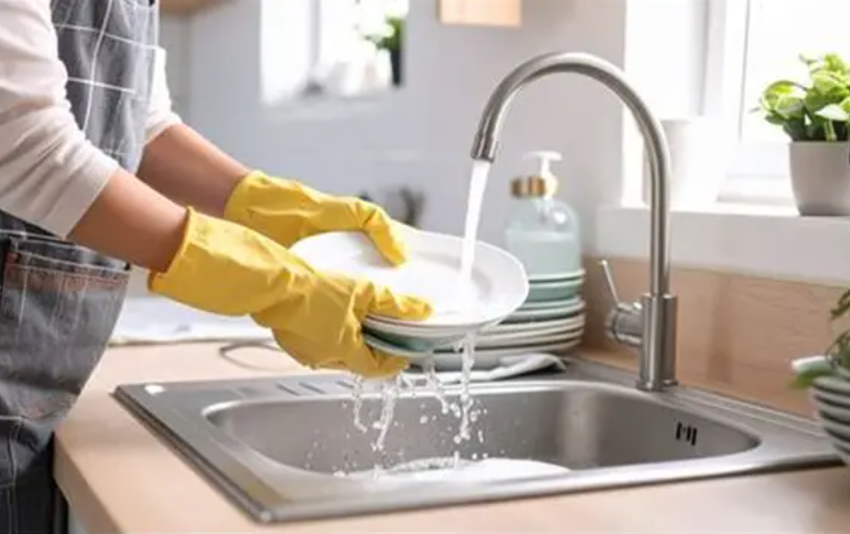
The Right Tools Can Make Dishwashing Easier
I’ve found that it’s much easier to build a dishwashing habit when everything I need is within reach. That means no old sponge that smells musty and no soap bottle that dispenses far more than I need. Small details can affect how a routine feels more than you might expect.
A good sponge should be comfortable to hold, durable, and able to dry between uses. Replace it regularly, since a damp, porous sponge can collect grime. After washing, rinse it thoroughly, squeeze out excess water, and store it somewhere it can air-dry.
I also prefer dish soap with a mild, clean scent. A strong fragrance can become irritating when you’re standing at the sink for a while. Well-fitting dishwashing gloves protect your hands from hot water and cleaning products. They can help keep skin from drying out and make handling greasy dishes feel less unpleasant.
How to Use Less Dish Soap
It’s easy to use more dish soap than you need if you squeeze it directly onto the sponge for every plate. The suds rinse away, your hand reaches for the bottle again, and the soap runs out sooner than expected.
Instead, add a small amount of dish soap to a bowl of warm water and dip the sponge into it as needed. This can help the sponge keep a lather going, and it’s often enough for everyday dishes. For a very greasy skillet or baking sheet, apply a drop of soap directly to the dirty area — but you don’t need to do that for every item.
More suds don’t always mean cleaner dishes. Warm water, prompt removal of food scraps, and the right sponge matter, too. If a plate isn’t greasy, a thorough rinse may be all it needs. This can be especially convenient for water glasses, tea mugs, and plates used for fresh fruit.
How to Clean a Burnt Pot Without Scrubbing for Ages
A burnt pot can test anyone’s patience. One mistake is to attack the residue immediately with a metal brush. It can damage the pot’s finish, and it may not remove the burnt-on food anyway.
If food is stuck to the bottom, add hot water and a little dish soap, then let the pot soak for at least 20–30 minutes. Once the residue softens, it should come off more easily. For stubborn burnt-on food, you can gently warm the soapy water in the pot over low heat. Turn off the stove, let the water cool, and then wash the pot as usual.
Take extra care with nonstick cookware. Abrasive powders, metal scrubbers, and sudden temperature changes can shorten the life of the coating. Use the soft side of a sponge, a silicone spatula, or a brush made for nonstick surfaces.
Cast iron needs a different approach. Don’t leave it wet for a long time, since moisture can cause rust. After washing, dry it right away with a towel or on the stovetop. If needed, wipe it with a thin layer of cooking oil.
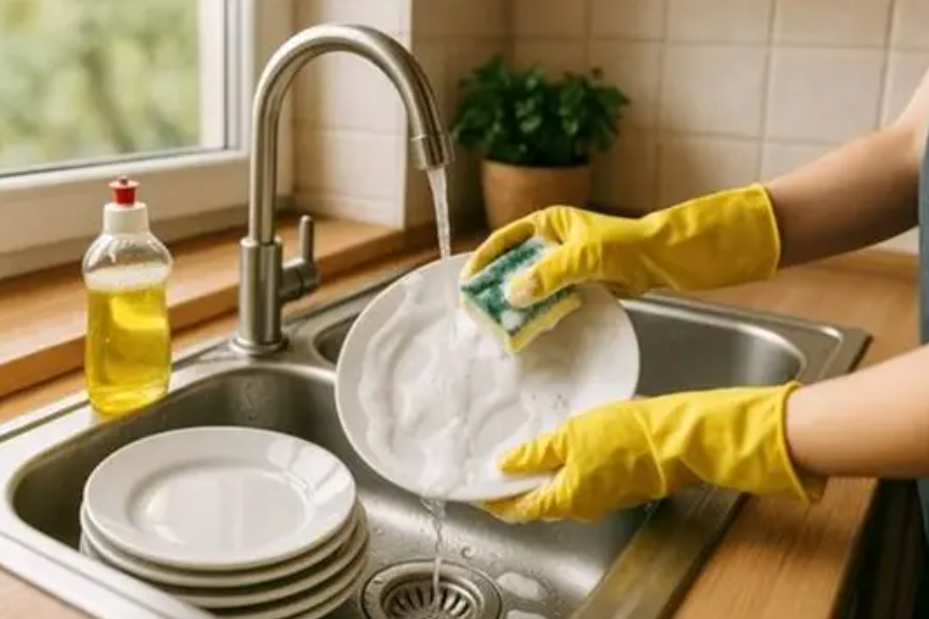
A Dishwashing Order That Saves Time
When there’s a big pile to wash, start with the cleanest items: glasses, mugs, and silverware. Then move on to plates, bowls, and food-storage containers. Leave skillets, baking sheets, and pots for last. This helps keep the water and sponge cleaner for longer and prevents greasy residue from spreading onto cleaner dishes.
While a stubborn pot or pan is soaking, use the time to wipe the counter, sweep up crumbs, rinse the sink, or put clean dishes on the drying rack. That way, it doesn’t feel as though all your time went toward one tedious chore — the whole kitchen gradually gets tidier.
Another useful habit is to empty the drying rack and put away dry dishes. If it’s already full, newly washed dishes have nowhere to go. They end up piled on a towel or crowded together, and it becomes harder to keep the kitchen organized.
Washing dishes doesn’t have to be enjoyable, but it can stop feeling like a daily ordeal. A little organization, useful tools, and short washing sessions can keep stress from piling up along with the plates.
What bothers you most when dirty dishes start piling up in the kitchen?