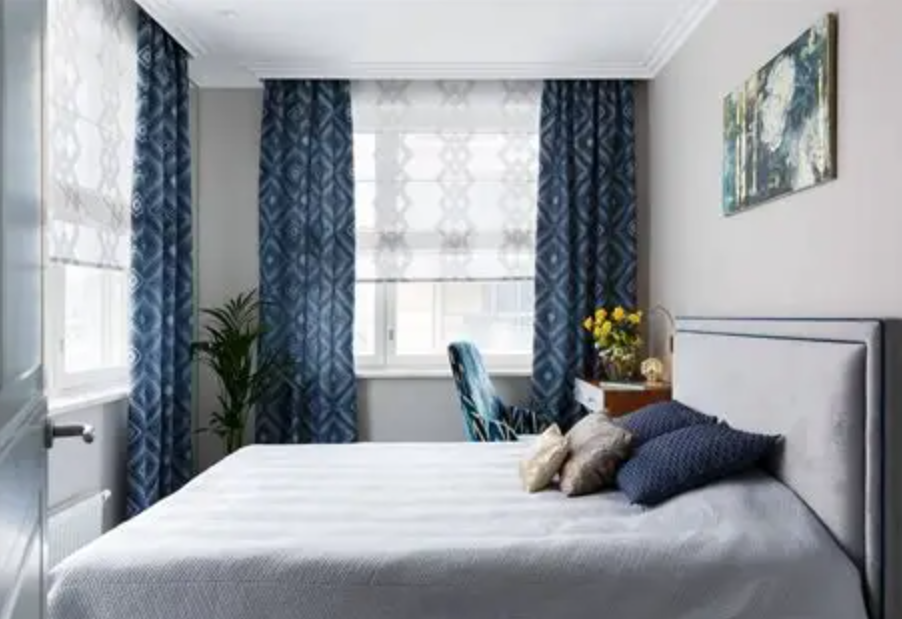
Sometimes a room feels cramped not because it’s short on square footage or packed with furniture. The window may be part of the problem. The wrong curtains can block natural light, make the ceiling seem lower, and leave even a tidy room feeling heavy.
I’ve found that changing curtains is much easier than repainting the walls or buying new furniture — and the difference can be surprisingly noticeable. The key is to look beyond a pretty store display and choose curtains that work with the room.
Why Curtains Matter in a Small Room
A window is one of a room’s main sources of natural light. Heavy, dark curtains can block daylight and make the walls seem closer together. The effect is especially noticeable in a small bedroom, nursery, or living room, and in homes where windows face north, overlook a courtyard, or are shaded by a neighboring building.
When I’m choosing curtains for a small room, I consider more than color. I also think about how the fabric will look when it’s hung across the window. A material that looks lovely as a small swatch may become a heavy wall of fabric once it’s spread out. In a compact space, that can make the room feel darker and more crowded.
Curtains don’t have to disappear into the background. They can complement the wall color, echo a bedspread or throw pillows, or add a subtle accent. But they shouldn’t compete with the rest of the room. The smaller the space, the more important it is to preserve a sense of light, order, and openness.
1. Choose Lightweight, Light-Filtering Fabric
Sheer and lightweight curtains are often a good choice for a small space. Look for voile, sheer panels, fine mesh, lightweight cotton, or loosely woven linen. These fabrics soften sunlight and provide some privacy without turning the window into a dark, solid block.
Lightweight linen brings a relaxed, cozy texture to a bedroom or living room. Unlike crisp white sheers, it can make a space feel warmer and more layered. Keep in mind, though, that natural linen may shrink in the wash and wrinkle easily. If you’d prefer a smoother look with less upkeep, consider a linen blend.
Organza lets in plenty of light, but its sheen may not suit every home. Against matte walls, wood furniture, and understated textiles, it can look a little too formal. Voile is usually softer and drapes more naturally, creating a light, airy look.
You don’t have to avoid blackout curtains or heavier drapes altogether. They can be useful if streetlights shine into the room or strong morning sun makes it hard to sleep. Instead of covering the window with a heavy, layered arrangement all day, pair light-filtering sheers with one set of simple drapes that can be pulled fully open.
2. Pick a Color That Keeps the Room Feeling Bright
Light-colored curtains can help a room feel more open. White, ivory, cream, light gray, sand, dusty blue, soft pink, and pale olive are easy to pair with many wall colors and won’t absorb as much light as dark fabrics.
But bright white isn’t always the best option. In a room with cool daylight, stark white curtains can look bluish and feel uninviting. Warm ivory, cream, or light beige may be a better fit. If your walls are gray or white, choose curtains a shade lighter or darker than the walls to create a cohesive look without making the room feel flat.
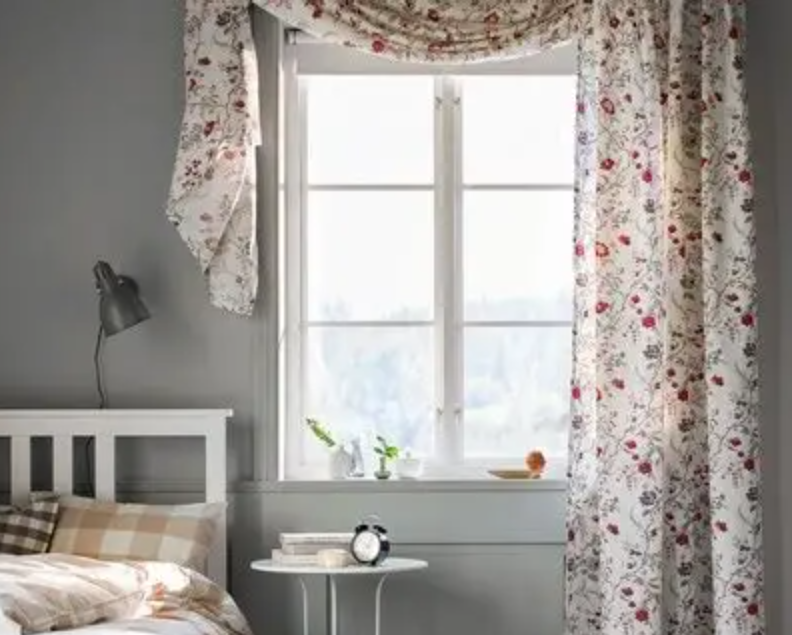
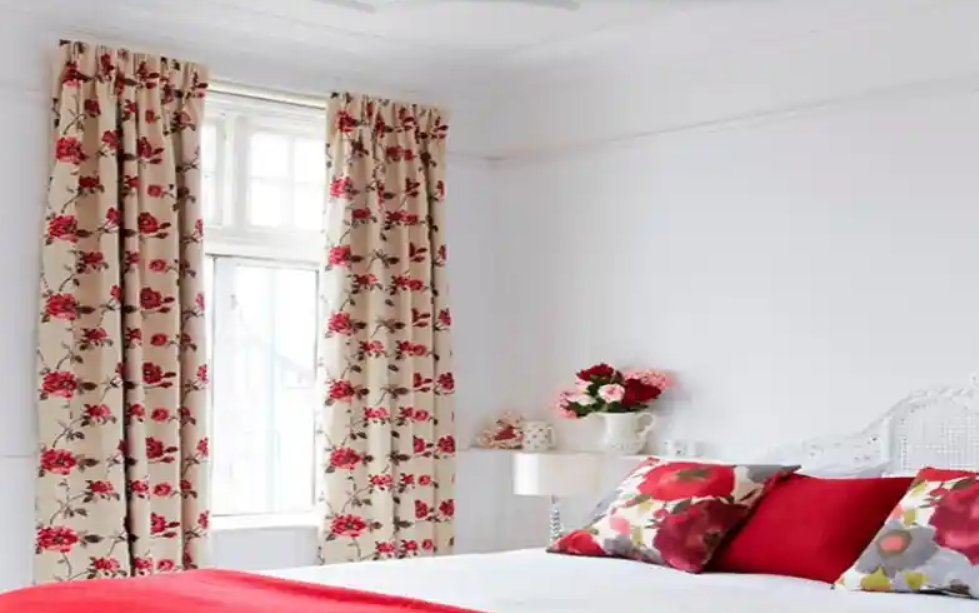
You can use color, too — just do it thoughtfully. A pair of muted terracotta, green, or blue curtains can bring life to a neutral room. For a small space, choose a matte fabric without large floral prints or high-contrast patterns. That way, the window adds character without feeling overwhelming.
Wondering how to choose curtains for patterned wallpaper? Pick a solid color that appears in the wallpaper. It helps the room feel coordinated and keeps the window from adding more visual clutter.
3. Hang Curtains High and Let Them Reach the Floor
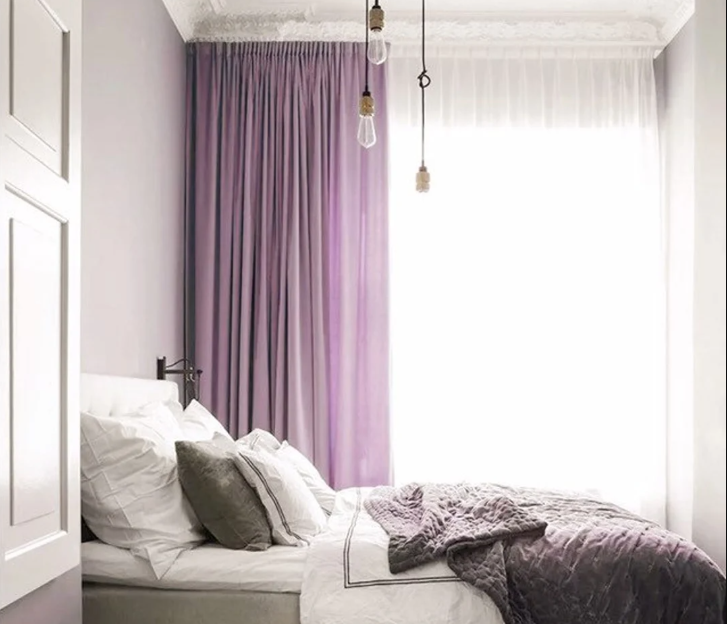
One of the simplest ways to make a room feel taller is to hang curtains from near the ceiling down to the floor. The long vertical lines draw the eye upward, making the ceiling seem higher and the room feel more balanced. This trick works especially well when the fabric is light enough not to weigh down the space.
Whenever possible, mount the curtain rod close to the ceiling. A rod that extends beyond the window frame also lets the panels stack on either side when they’re open, so they don’t cover the glass. The window can look wider, and more daylight can reach the room.
Measure the curtain length carefully. Panels can just touch the floor or stop about ⅜ inch above it — both options look neat and are easy to maintain. Curtains that puddle in folds on the floor may look romantic in photos, but they can collect dust and get in the way of cleaning, especially in a small home.
Short curtains aren’t always a mistake. They can work well when there’s a desk, countertop, or furniture beneath the window. For a small kitchen, consider Roman shades or roller shades: they take up little space, won’t interfere with opening the window, and let you adjust the light.
4. Keep the Style Simple
A small room can feel crowded when the window treatment has too many details. Valances, layered swags, shiny tassels, oversized tiebacks, and contrasting trim can make the space look heavy or dated. Even beautiful fabric can lose its appeal when it’s competing with too much decoration.
Straight panels with simple, even folds tend to look fresh and polished. Roman shades are another practical option for a small room. They lift into neat horizontal folds, leave the windowsill accessible, and work well in kitchens, home offices, bedrooms, and nurseries.
Roller shades are handy when you keep plants on the windowsill or open the window often. You can pair one with lightweight side panels: the shade provides privacy and sun protection, while the curtains soften the look. It’s a good solution if you want a cozy window without giving up useful windowsill space.
5. Be Careful with Bold Patterns and Bulky Folds
Large, high-contrast florals, wide horizontal stripes, and busy geometric prints don’t usually help a small room feel more spacious. They break up the wall around the window and draw the eye to the pattern. As a result, the room can feel restless, even when it has only a few furnishings.
If plain curtains seem too simple, look for subtle texture, a fine vertical stripe, or a small, low-contrast print. Ideally, the pattern should be noticeable up close but read as a soft, cohesive texture from across the room.
The amount of fabric matters, too. Very full curtains can look bulky, especially on a small window. Sheer panels usually need only moderate fullness. For heavier drapes, choose the amount of fabric based on how the material hangs: the heavier it is, the simpler the folds should be.
6. Consider Roman or Roller Shades
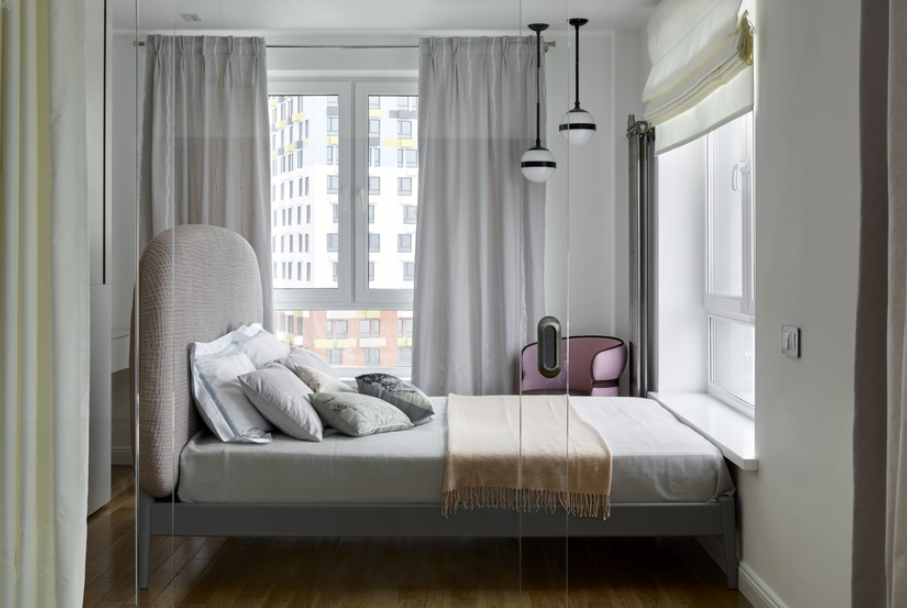
When floor-length panels aren’t practical, Roman and roller shades can be excellent space-saving window treatments. Roman shades add soft folds without taking up much room around the window. Roller shades have a clean, streamlined look and are especially useful when you want to keep a windowsill clear.
For a layered look, combine a shade with simple, lightweight curtain panels. This gives you more control over privacy and sunlight without adding heavy layers or elaborate trim.
7. Test a Fabric Sample Before You Buy
Before choosing curtains, bring home a fabric sample and hold it against the wall near the window. Check how it looks in the morning, afternoon, and evening. Natural and artificial light can change a color more than you might expect under store lighting.
A beige fabric that looks soft and neutral in the showroom may appear too yellow at home, while gray can turn out colder than you wanted. Seeing a sample in your own space can help you avoid a costly disappointment.
The right curtains won’t physically add square footage, but they can help you make the most of the room you have. Lighter fabric, thoughtful color, simple details, and a well-placed curtain rod can bring in more light and create a greater sense of height and calm.
What kind of curtains made your room feel cozier?