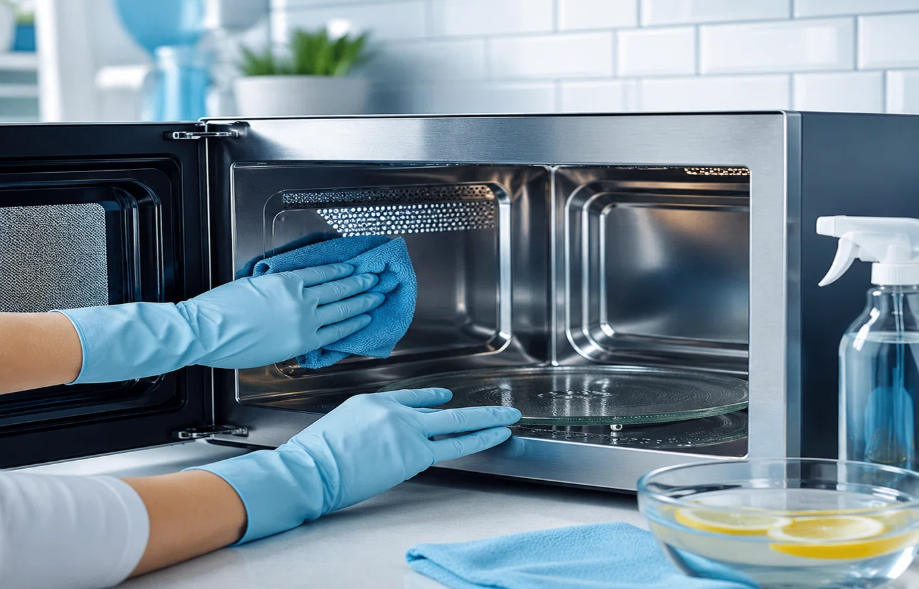
Sometimes all it takes is opening the microwave door to make the kitchen feel less inviting. There are splatters on the walls, dried-on drips on the ceiling, and the smell of last night’s dinner still hanging around. The worst part isn’t even the mess — it’s the thought of scrubbing every corner with a sponge.
I’ve noticed that the harder I scrub, the longer the job takes — and the more likely I am to damage the microwave’s interior. A gentler approach works better: loosen the grime with steam first, then wipe it away. It makes cleaning dried grease from a microwave feel much less like a chore.
Why Dried Grease Is Hard to Clean in a Microwave
As food heats, tiny droplets of oil, sauce, and moisture settle on the inside of the microwave. Fresh splatters are easy to wipe away with a damp cloth. But if they’re left behind, they dry out, collect dust, and form a stubborn film.
Microwaves get especially messy when you heat soup, gravy, meat, oatmeal, or other uncovered foods. Splatters can land on the turntable, underneath it, and around the door. That’s why people often start wondering how to clean a microwave interior only after a regular sponge no longer seems to do the trick.
Avoid stiff scrub brushes and scouring powders. They can scratch the interior coating, giving grease more places to cling. Strongly scented cleaners may also leave behind odors that you’ll notice the next time you heat food.
Let Steam Do the Hard Work
One of the simplest ways to loosen microwave grease is to create steam inside the appliance. The warm moisture settles on the walls and softens dried-on splatters, so you can wipe them away without scraping or heavy scrubbing.
You’ll need:
⦁ A deep, microwave-safe glass or ceramic bowl
⦁ 1 cup water
⦁ 1–2 tablespoons white vinegar
Don’t fill the bowl to the brim. Water can bubble vigorously as it heats.
1. Place the bowl in the center of the microwave.
2. Heat on medium power for about 2–3 minutes, keeping an eye on it so the water doesn’t boil dry. The exact time depends on your microwave’s wattage and how dirty the interior is.
3. When the microwave turns off, leave the door closed for 5 minutes. The warm, moist air will continue loosening the grime.
4. Carefully open the door, remove the hot bowl with an oven mitt, and wipe the inside with a soft cloth.
The steam does most of the work. You’ll still need a cloth at the end, but only to pick up the loosened grease and moisture — not to scrub stubborn spots.
How to Clean a Microwave with Vinegar
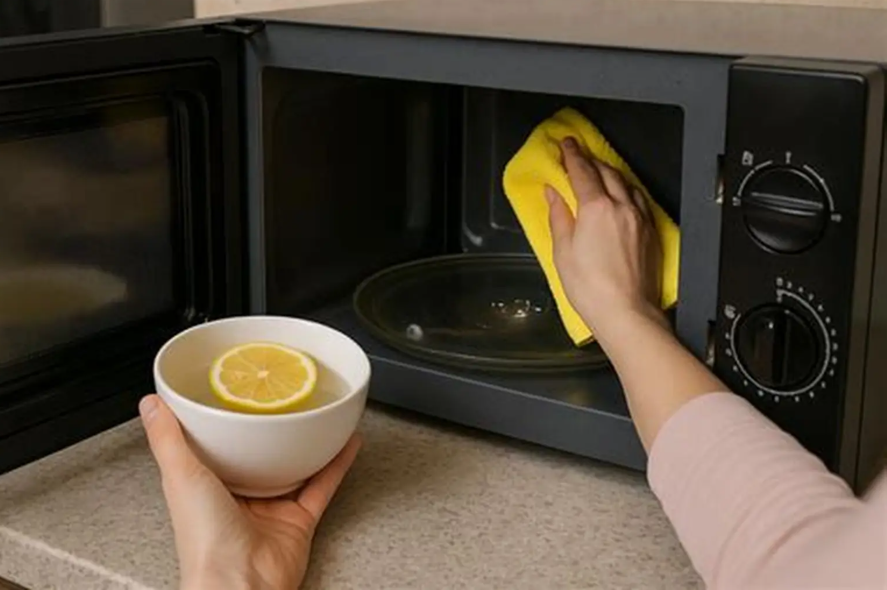
A diluted vinegar solution can help loosen greasy residue and reduce lingering odors. There’s no need to use a large amount: extra vinegar won’t necessarily make cleaning more effective, but it can leave a stronger smell. For 1 cup of water, use 1 tablespoon of vinegar for light messes or up to 2 tablespoons for heavier buildup.
Once the microwave has sat with the door closed, carefully remove the bowl and wipe the interior with a soft, damp cloth. For a simple way to clean a microwave without harsh household cleaners, this method is often a good place to start.
Don’t use undiluted vinegar, pour it directly onto the microwave walls, or leave it sitting inside the appliance. If the interior coating is chipped, deeply scratched, or damaged, use plain water instead and check the manufacturer’s instructions for your model.
Clean the Turntable, Door, and Hard-to-Reach Spots
Remove the glass turntable and wash it separately in warm water with a little dish soap. Crumbs and grease often collect underneath it, where they can go unnoticed until they start to smell during the next heating cycle. Wipe the roller ring carefully, too, and let it dry before putting everything back.
Clean both sides of the door, taking care not to use too much water. Pay special attention to the inside edge and the door seal, where food residue can collect. Never pour liquid into vents, grilles, or gaps. Use only a slightly damp cloth around these areas.
If a spot still feels sticky after steaming, don’t scrape it with a knife or metal scrubber. Repeat the steam treatment and leave the door closed for a little longer. It’s gentler on the microwave’s interior and usually gives you a better result.
When to Use Lemon or Baking Soda Instead
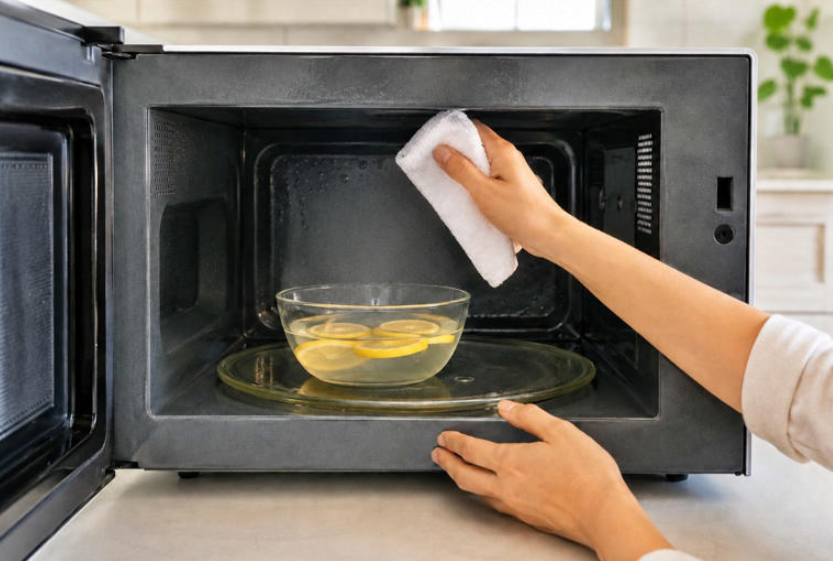
If you don’t like the smell of vinegar, try heating water with a few lemon slices or a small amount of lemon juice. The method is the same: warm the liquid, let the steam sit inside the closed microwave for a few minutes, then wipe away the loosened grime. Lemon can leave the microwave smelling fresher.
Baking soda may help freshen a lightly soiled microwave and reduce odors. You can dissolve a small amount in water and heat it briefly. Don’t scrub the interior with dry baking soda, though. Even a powder that seems mild can damage a delicate surface if you rub too hard.
If the grease is very old, dark, or burned onto the walls, a home remedy may not be enough. Use a product specifically labeled for microwave ovens and follow its directions carefully. Wipe away all cleaner residue before using the appliance again.
How to Keep Your Microwave Clean Longer
The easiest way to prevent splatters is to cover food with a microwave-safe splatter cover while heating. It lets the food warm while catching most of the mess. It also helps to wipe up fresh drips as soon as the microwave is cool enough to clean, before they dry into stubborn spots.
I like to give the interior a quick wipe with a warm, damp cloth about once a week and use the steam-cleaning method whenever needed. A few minutes of routine care can save you from putting off a bigger cleanup until the microwave looks badly neglected.
A clean microwave is a small but satisfying part of a tidy kitchen. Sometimes a bowl of water and a little patience are all it takes to avoid a long scrubbing session. What’s your favorite way to get your microwave clean again?