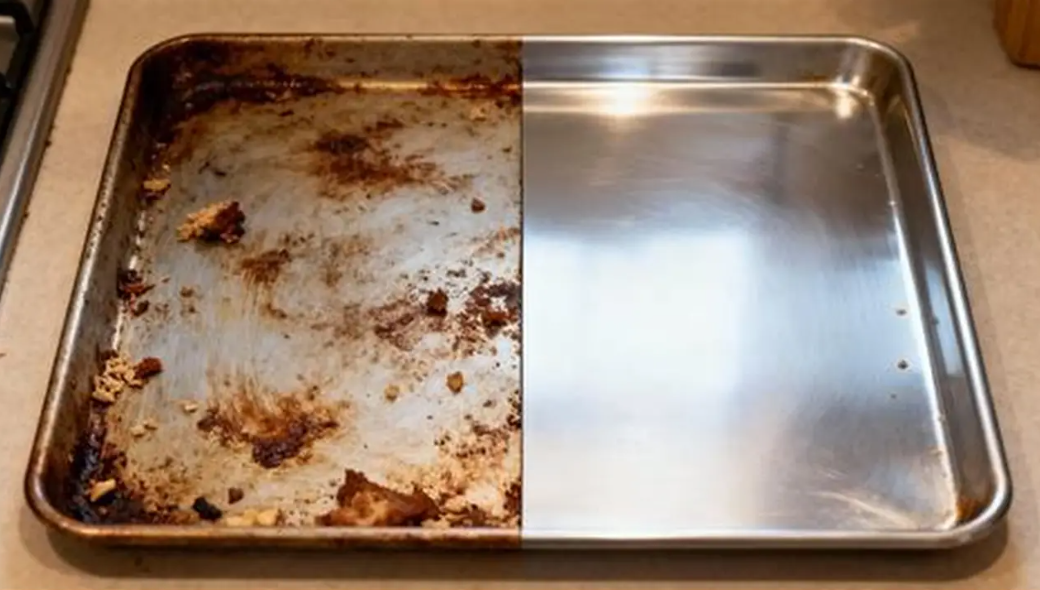
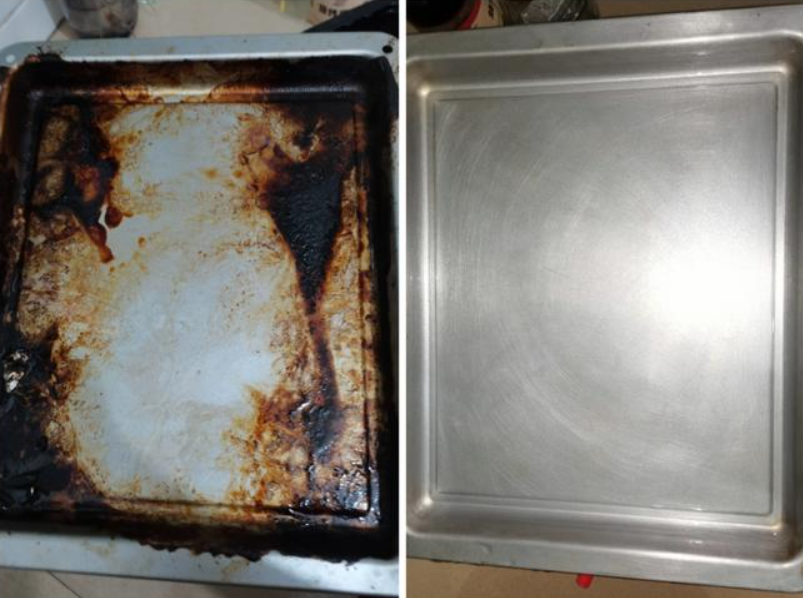
There are some kitchen items that can ruin your mood at a glance. You pull a baking sheet out of the cupboard, and it looks as if every roasted dinner, pie, and batch of potatoes has left a permanent mark. You’re tempted to put it back and deal with it later — because you can already picture the steel wool, dark smudges, and tired hands.
But I’ve found that it’s often not the cleaning itself that wears us out; it’s trying to tackle the problem by force. Baked-on grease may look impossible to remove, but it doesn’t always need a knife or a harsh scraper. Sometimes, the best approach is to let a cleaning paste do the hard work for you.
Why Baked-On Grease Is So Hard to Remove
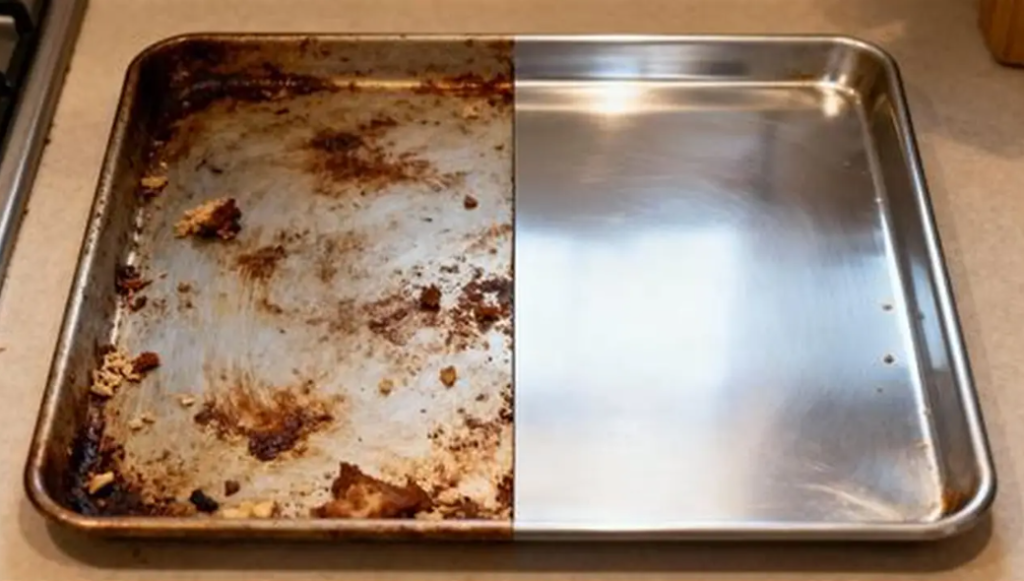
The dark residue on a baking sheet isn’t just dried-on dirt. During baking, oil, meat juices, proteins, sugar, and food particles heat up, change structure, and bond to tiny imperfections in the metal. This buildup forms faster when food is cooked at high temperatures or the pan is left unwashed overnight.
Hot water alone usually won’t do much: grease doesn’t dissolve in water. That’s why a quick wash after cooking can be disappointing. The top layer may loosen, but the stubborn, dark residue remains.
Scraping the surface with a knife is a bad idea. It can leave scratches where grease and food are more likely to collect. Enamel-coated and nonstick pans are especially easy to damage. Once their coating is scratched, they may not perform as well, and food may stick more readily.
A Simple Cleaning Paste for Baked-On Grease
When I need to clean a baking sheet at home, I use a simple paste made with baking soda, 3% hydrogen peroxide, and a small amount of dish soap. These ingredients are easy to find, and the paste takes only a few minutes to mix.
Baking soda helps loosen greasy residue. Hydrogen peroxide can help lift organic stains and lighten discolored areas. Dish soap helps the paste spread over the surface and work on the stuck-on grease.
Ingredients
For one standard baking sheet, you’ll need:
⦁ 3 tablespoons baking soda
⦁ 2 tablespoons 3% hydrogen peroxide
⦁ 1 teaspoon dish soap
The mixture should have the consistency of a thick paste. If it seems too dry, add a few drops of hydrogen peroxide. If it’s too runny, stir in a little more baking soda.
The mixture may fizz slightly, but there’s no need to turn cleaning into a science experiment. Don’t mix it with vinegar, bleach, drain cleaner, or other harsh products. The three ingredients listed above are all you need for this method.
How to Remove Baked-On Grease from a Baking Sheet
First, wipe away crumbs and food scraps with a paper towel. Then lightly dampen the baking sheet with warm water. There’s no need to soak it for hours — the moisture simply helps the paste spread evenly.
Apply a thick layer of paste to the greasy areas, paying special attention to the corners, edges, and spots where oil tends to collect. Leave it on for 1–1½ hours. For older, heavier buildup, you can leave it for up to 3–4 hours, but don’t let it sit overnight.
As the paste works, the dark residue should soften and start to lift in flakes or larger pieces. Rinse the pan with hot water and wipe it with a soft sponge. In most cases, you won’t need to press hard: softened grease is much easier to remove.
If a few spots remain, don’t scrub them aggressively. Apply fresh paste to those areas and let it sit for another 30–40 minutes. Two gentle treatments are safer for your cookware — and your hands — than one harsh scrubbing session.
Which Baking Sheets Shouldn’t Be Cleaned with This Paste?
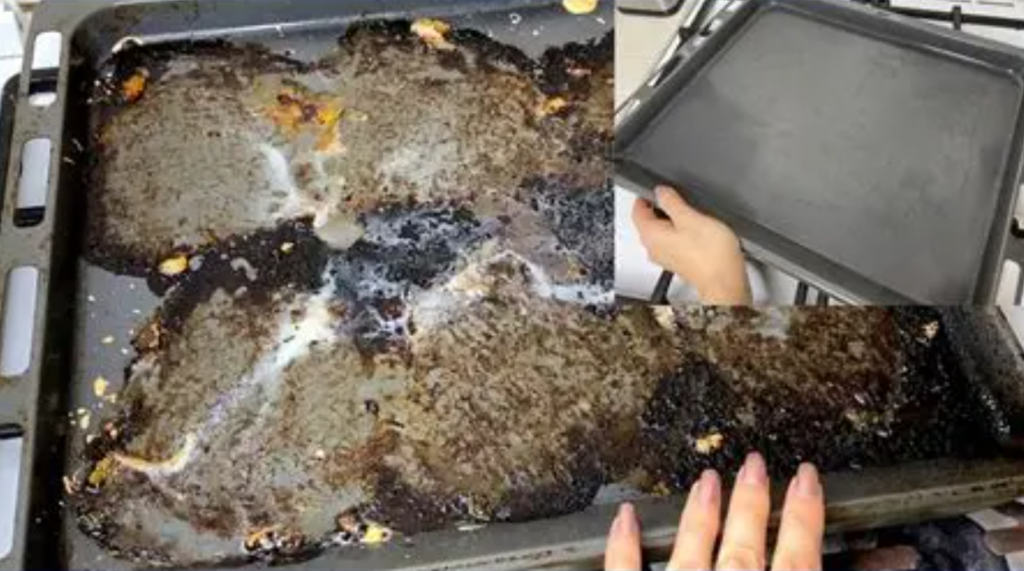
Uncoated metal pans can usually handle this method. It may also work on many enamel-coated baking sheets and sturdy oven-safe glass dishes. Even so, it’s a good idea to test the paste on a small, inconspicuous area first.
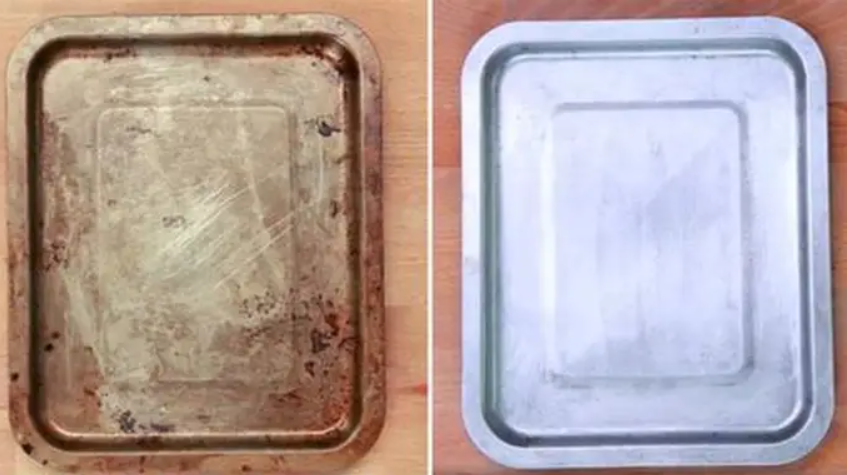
Use extra caution with aluminum cookware. Alkaline cleaners such as baking soda may darken aluminum or change its appearance. If you’re not sure what your pan is made of, stick to a warm soak with dish soap instead of using baking soda and hydrogen peroxide.
Avoid abrasive cleaners and stiff brushes on nonstick baking sheets. Although you could test the paste gently and for a short time, the safer option is warm water, a soft sponge, and mild dish soap. If the nonstick coating is already damaged, deeply scratched, or peeling, replace the pan.
How to Prevent Baked-On Grease
The easiest way to avoid dealing with old, baked-on grease is to protect the baking sheet while you cook. Parchment paper, a silicone baking mat, or foil can help reduce mess. Just make sure your choice is safe for the oven temperature listed on the package.
After cooking, don’t wait until the pan has cooled completely and the grease has hardened. Once it’s warm — not hot — soak it in hot water with a drop of dish soap for 10–15 minutes. Most residue should then come off quickly, without a long scrubbing session.
I also avoid using steel wool “just in case.” It may seem effective at first, but it can gradually roughen the surface. The more tiny scratches a pan has, the easier it is for grease and food residue to cling to it — and the harder it becomes to clean.
Cleaning Safety Tips
Hydrogen peroxide can bleach fabric and irritate sensitive skin, so consider wearing gloves. Avoid leaning over the paste, keep it out of your eyes, and rinse the baking sheet thoroughly after cleaning.
Don’t heat the baking sheet in the oven with the paste on it, and don’t use this method on cookware with visibly damaged coatings. A homemade cleaner should make kitchen cleanup easier — not put your health or cookware at risk.
A clean baking sheet doesn’t have to cost you an evening of scrubbing. A little patience, a soft sponge, and a simple cleaning paste can often work better than force and frustration. What do you use to clean your baking sheet after a particularly messy meal?