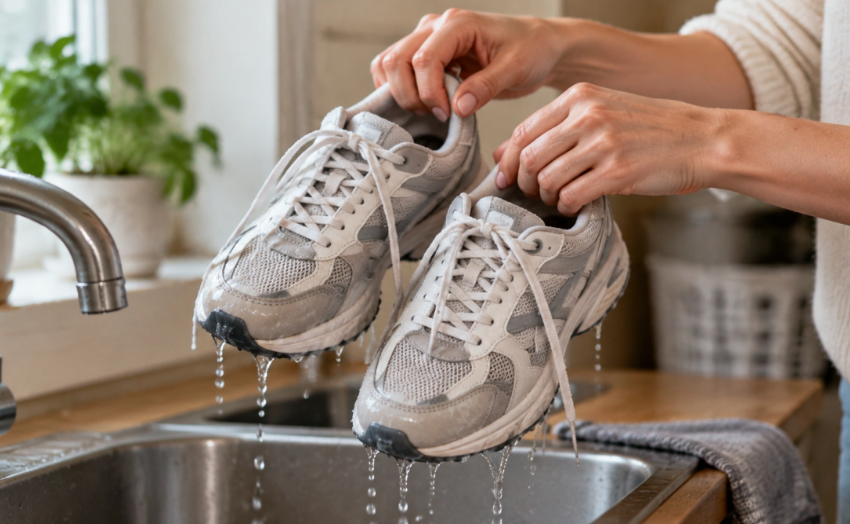
A rainy walk can leave my sneakers soaked through — and the last thing I want is to start the next morning with cold, damp shoes. It’s tempting to set them on a hot radiator or blast them with a hair dryer, but direct heat can damage the materials and loosen the glue.
Fortunately, I can dry wet sneakers overnight without an electric shoe dryer. A few things you probably already have at home, some airflow, and a little patience can help draw out moisture while protecting your shoes.
Why You Shouldn’t Dry Sneakers on a Radiator
When I need to dry shoes quickly, putting them right next to a radiator or aiming hot air inside can seem like the obvious solution. But sneakers are made from several materials joined together with adhesives. High heat can weaken those bonds, warp the sole, or cause the edges to peel away.
Lightweight running shoes with layered soles can be especially vulnerable. Repeated exposure to heat may make the sole stiffer or cause it to lose its shape. A hair dryer can also dry synthetic leather, fabric, and foam unevenly. The outside may feel dry while moisture remains deep in the toe area.
For safe sneaker drying at home, I focus on removing moisture and improving airflow — not using high heat.
Remove Excess Water First
Before stuffing wet sneakers with paper, I take a few minutes to remove as much water as possible:
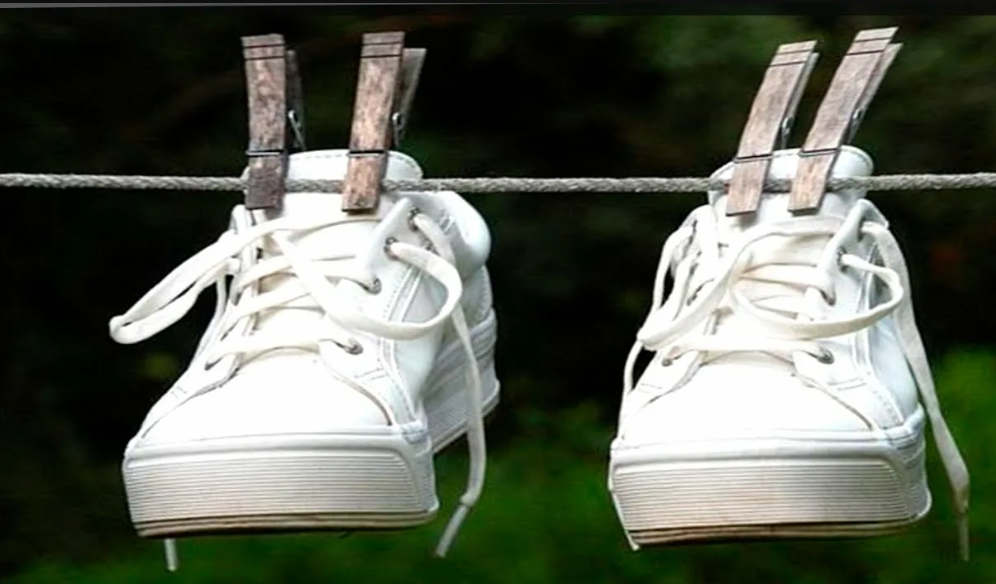
1. Remove the laces and insoles. Blot the laces with a dry cloth and leave them to air-dry. Set the insoles on a towel in a well-ventilated spot, turning them over every couple of hours. Don’t place them on a hot surface.
2. Open the sneakers as much as possible. Loosen the laces, pull the tongue forward, and gently spread the upper.
3. Wipe away dirt from the soles and blot the inside with a dry cloth.
4. Don’t wring out the shoes or press down hard on the soles. That can distort their shape.
Once I’ve blotted away the excess water, I’m ready to use an absorbent filling.
Use Paper to Draw Out Moisture
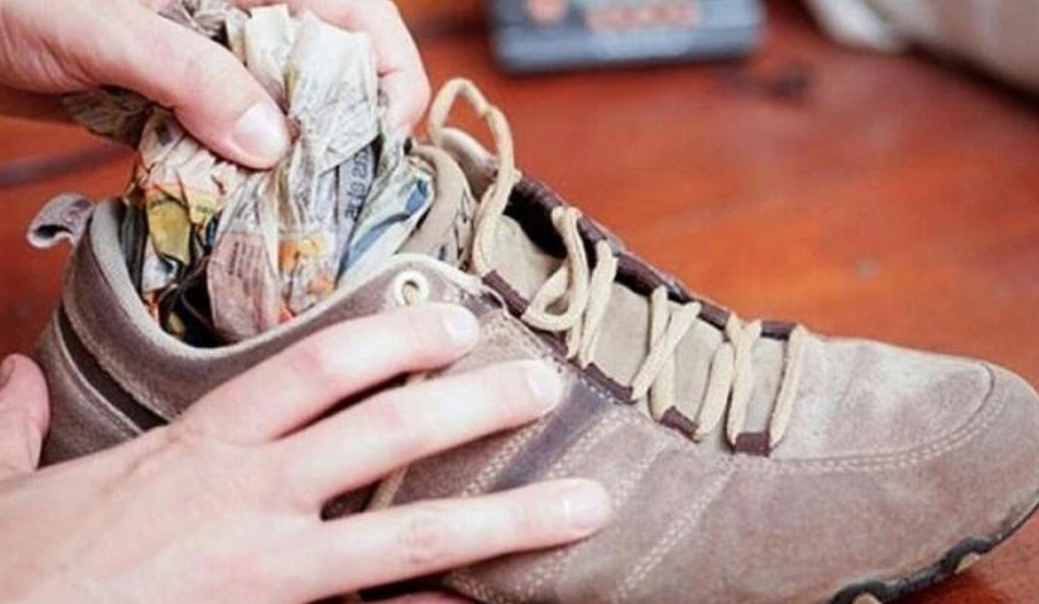
Plain, uncoated paper is one of the easiest ways to dry wet sneakers without a dryer. Newspaper, paper bags, or uncoated packing paper all work well. I avoid glossy magazine pages because they don’t absorb much moisture and the ink may transfer to light-colored linings.
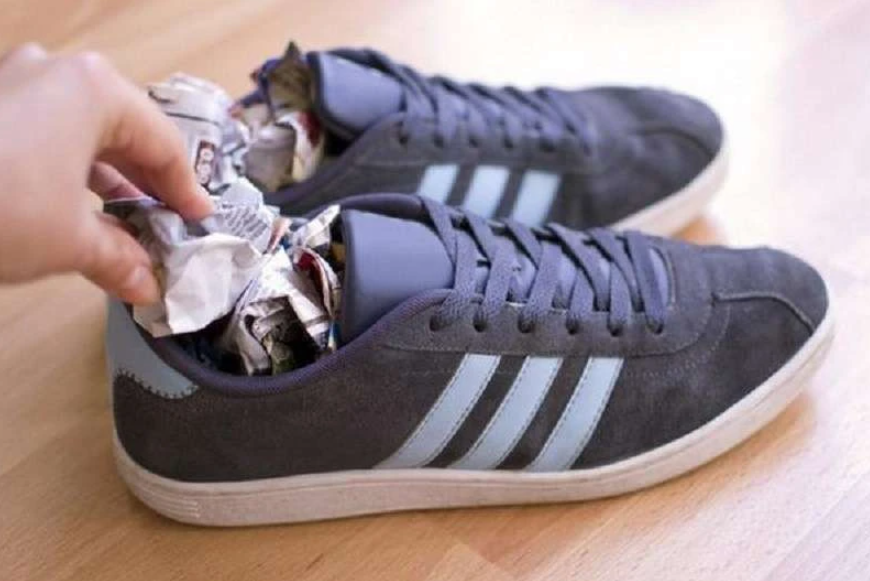
Loosely crumple the paper and place it inside the toe, then fill the middle of each shoe. Don’t pack it too tightly: air needs to circulate, and the sneakers should keep their natural shape.
Paper can absorb moisture from the lining and areas around the insole. For the best results, replace it after about two to three hours. Once the paper is soaked, it stops drawing moisture out and can keep the shoes damp. Changing it once during the evening can make a noticeable difference.
Can You Use Rice to Dry Sneakers?
Rice is sometimes recommended for drying shoes, but loose grains can get trapped in seams or under the insole. A neater option is to put dry rice in a clean cotton sock, fabric pouch, or piece of tightly woven cheesecloth, then place it inside the sneaker.
Rice works best after you’ve blotted away excess water. If the sneakers are soaked through, use paper first and switch to rice-filled pouches after a few hours. The pouches can help absorb lingering moisture, but they’re not a substitute for good airflow.
Some people mix coarse salt with rice, but I avoid putting that mixture directly in my shoes. Salt can leave marks on wet fabric or leather and may contribute to corrosion around metal eyelets. For expensive, light-colored, or leather sneakers, I stick with paper and ventilation.
Let Air Circulate Around the Shoes
To dry sneakers overnight, place them in a dry, well-ventilated room. A spot near an open interior door or window can work well. You can also use a regular fan to keep air moving around the shoes; it doesn’t need to blow directly into them.
Avoid putting wet sneakers in a closed closet, a damp bathroom, or on a cold, humid balcony. If the room is cool, set the shoes on a dry towel or a rack rather than directly on the floor. This allows air to circulate underneath them, too.
Sneakers that have been washed usually hold more water than shoes that got wet in the rain. They may be noticeably drier by morning, but they might not be ready to wear. If the lining still feels damp, give them more time. Wearing wet shoes can cause discomfort and make them smell musty.
What to Do If You’re Short on Time
If your sneakers are still a little damp in the morning, don’t try to speed things up with an oven, microwave, or boiling water. A microwave is particularly dangerous: metal eyelets can spark, and uneven heat can damage adhesives and synthetic materials.
Instead, replace the paper, remove and wipe down the insoles, and leave the shoes somewhere with good airflow for a few more hours. If you have another pair, wearing it for the day is safer than risking heat damage.
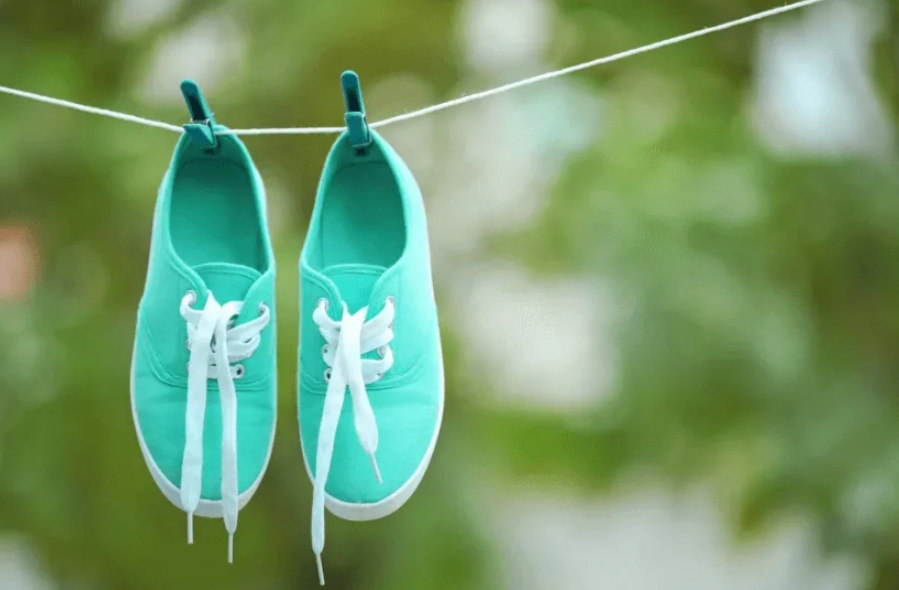
The Safest Way to Dry Wet Sneakers
The best way to dry sneakers without a dryer is simple: blot away excess water, remove the insoles and laces, use loosely packed absorbent paper, and leave the shoes in a dry place with good airflow. Gentle drying takes longer than direct heat, but it helps protect the shape and materials of your sneakers.
How do you usually dry your shoes after they get soaked?