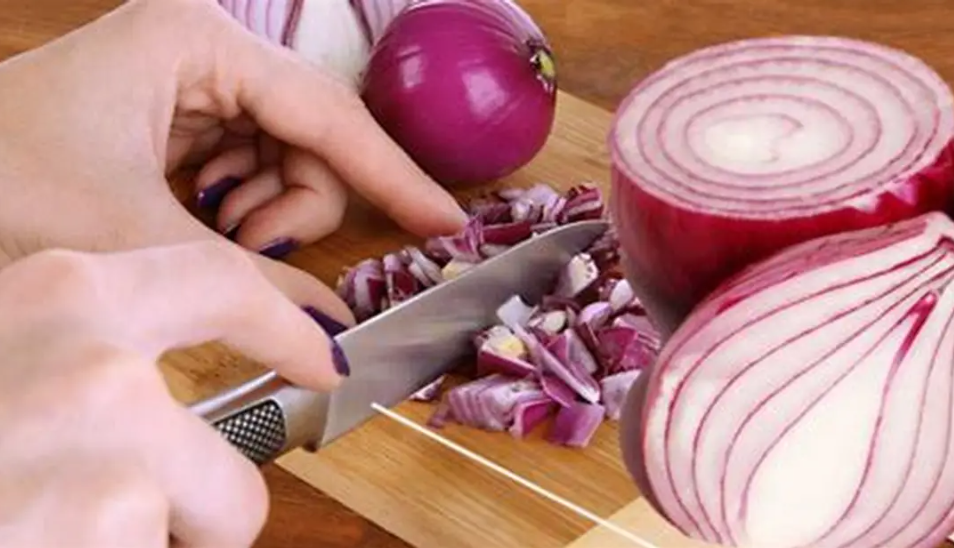
Cutting onions can turn an ordinary dinner prep into a teary-eyed chore. My eyes used to sting and water every time I chopped one, so I assumed it was just part of cooking. Then I tried changing one small step — and found that chopping onions doesn’t have to be so uncomfortable.
You don’t need an expensive gadget or an unusual internet hack. A little chilling time, a sharp knife, and a few minutes of preparation can make a real difference. Here’s how to cut onions without crying, along with a few practical tips for a more comfortable kitchen routine.
Why Do Onions Make You Cry?
An onion may seem as if it’s designed to make us cry, but watery eyes are simply a natural defense response. Inside an intact onion, certain compounds are kept separate. When you cut into it, the cells break and those compounds react, releasing volatile sulfur-containing substances into the air. One of the resulting compounds, syn-propanethial-S-oxide, irritates the eyes.
When these particles reach the moist surface of your eyes, your body responds by producing tears to wash the irritant away. So if onions make you cry, it doesn’t mean you’re unusually sensitive or doing anything wrong — it’s a normal reaction.
Chill the Onion Before You Cut It
I used to be skeptical about putting an onion in the freezer. I thought it might turn watery, lose its flavor, or become difficult to chop. But as long as you chill it briefly, that shouldn’t happen.
To reduce onion tears, place a whole, unpeeled onion in the freezer for about 10 to 15 minutes before cutting. It will get cold without freezing solid. Chilling slows the chemical reaction that begins when the onion’s cells are damaged, so fewer irritating compounds are released into the air.
If your freezer runs especially cold, start with 10 minutes. Small onions chill faster than large ones, so don’t leave them in too long. A fully frozen onion can become soft and watery after thawing, which makes it harder to cut neatly and less suitable for salads.
When I’m making soup, sautéed vegetables, meatballs, or pie filling, I pop the onion in the freezer before I start cooking. By the time I’ve gathered my ingredients, washed the herbs, or heated a pan, it’s ready. My eyes may still react a little, but the sharp stinging is usually much less noticeable.
A Sharp Knife Makes a Difference
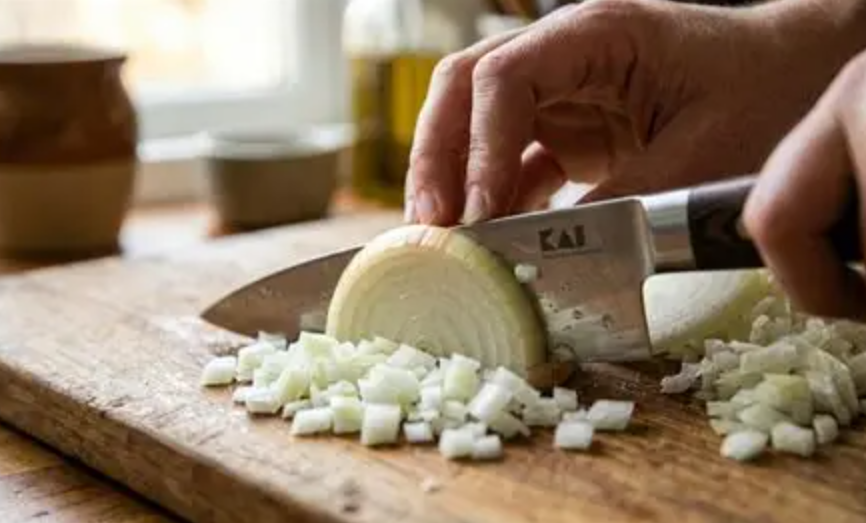
A dull knife can make your eyes water more. Instead of slicing cleanly, it crushes and tears the onion’s flesh. That damages more cells and releases more juice and irritating compounds.
A sharp knife makes a cleaner cut and causes less damage to the onion. Use it steadily, without rushing, and make sure your cutting board won’t slide around on the counter.
It can also help to leave the root end intact until you’re nearly finished. The root area contains more of the compounds responsible for the onion’s sharp smell, so avoid cutting it off at the start. Peel the onion, halve it through the root, make your slices or cuts, and trim away the root end last.
How to Chop Onions Without Tears
When I need to get dinner on the table quickly, I rely on a few simple steps:
1. Chill the whole onion in the freezer for 10 to 15 minutes.
2. Use a sharp knife and a stable cutting board.
3. Keep your face a little farther from the board as you chop.
4. Turn on the range hood or open a window to help move the fumes away.
The closer your face is to the onion, the more likely irritating vapors are to reach your eyes. Good ventilation can help keep them from lingering. You can set up your cutting board near a running range hood, but avoid aiming a strong fan directly at the onion — it may spread the fumes around the kitchen instead.
Some cooks recommend wetting the knife. It may help a little, but a wet handle or blade can be slippery and unsafe. I prefer to use a dry, sharp knife and a chilled onion. It’s simple, safer, and still lets me make neat cuts.
Can Water Help With Onion Tears?
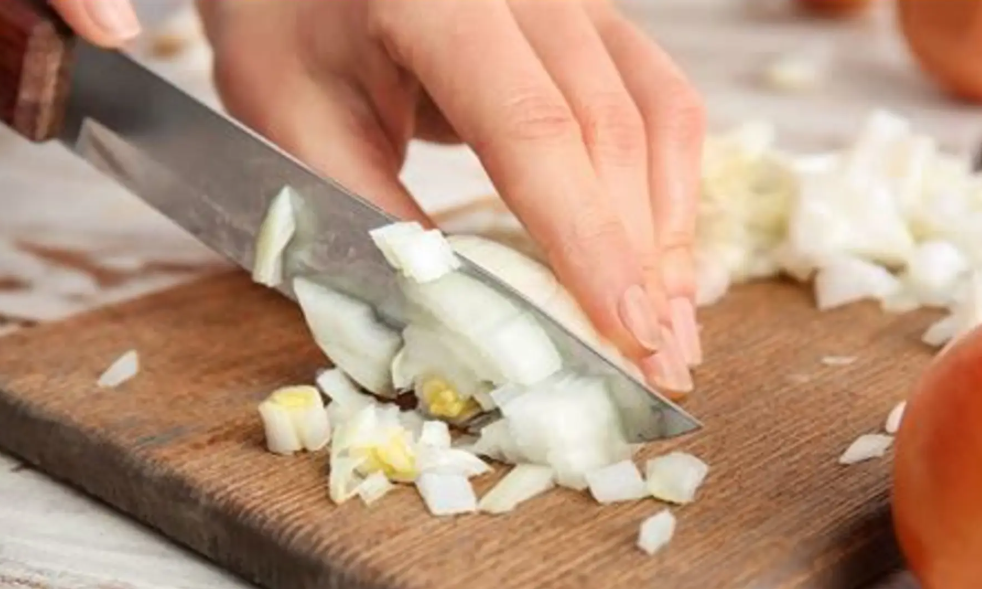
Soaking chopped onion in cold water for 5 to 10 minutes can mellow its flavor. This is useful when you’re adding raw onion to salads, vinaigrettes, or appetizers and want it to taste less sharp.
But soaking works after the onion has already been cut, so it won’t prevent your eyes from being exposed to the irritants during chopping. Drain the onion well and pat it dry before adding it to a salad. Otherwise, excess water can make the dish soggy. Wet onions also won’t brown as well in a pan.
If you want a full, savory onion flavor for soup, sauce, or a braise, skip the soak. Instead, chill the onion before cutting, use a sharp knife, and keep the air moving in your kitchen.
Onion-Cutting Tricks You Don’t Need to Rely On
There are plenty of folk remedies for preventing onion tears: chewing bread, holding a spoon in your mouth, wearing glasses, or lighting a candle nearby. Some may seem entertaining, and a few might offer limited help, but they aren’t the most dependable solutions.
Close-fitting goggles can create a physical barrier between your eyes and the fumes, which may be useful if you’re preparing a large batch of onions. But they’re probably more gear than you need for everyday dinner prep. Chewing gum, holding a spoon in your mouth, or eating bread doesn’t address what causes the irritation.
Cutting onions under running water isn’t a great idea, either. Water may trap some of the compounds, but using a knife under a stream is awkward and potentially unsafe. It can also wash away some of the onion’s flavor and make it harder to get even cuts.
Which Onions Are More Likely to Make You Cry?
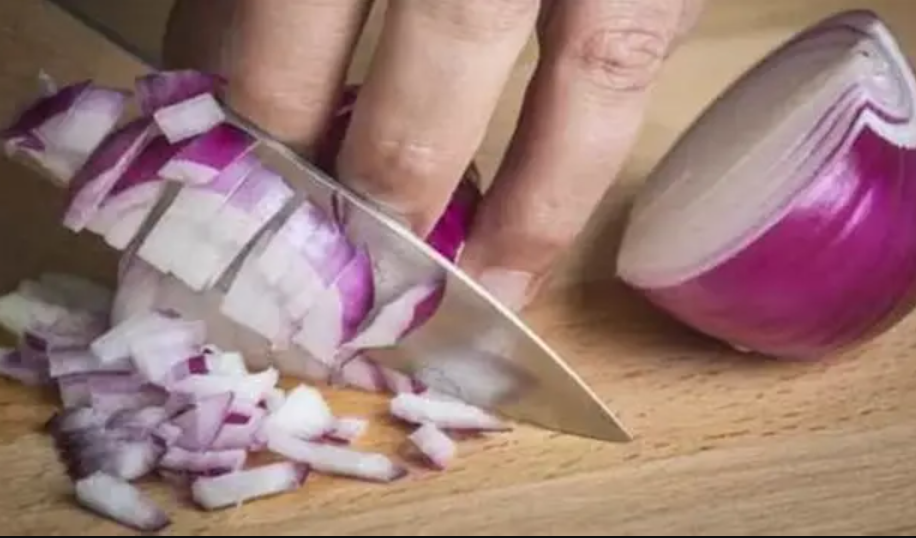
Not all onions are equally sharp. Yellow and white onions often taste more pungent than red onions, while sweet onions and fresh green onions tend to be milder. If you’re serving onion raw, a red or sweet variety may be a gentler choice.
The onion’s variety, growing conditions, maturity, and storage can all affect its flavor. Onions with a stronger sulfurous aroma may have a more pronounced taste, but they can also be more likely to make your eyes water.
Store whole onions in a cool, dry, well-ventilated place rather than in a tightly sealed plastic bag. Avoid keeping them in the refrigerator long-term, where excess moisture can affect the papery skins and encourage spoilage. Chilling an onion in the refrigerator or freezer just before cooking is a different matter — and can be a useful part of your prep.
A small change in your routine can make chopping onions much more pleasant. Ten minutes in the freezer won’t change the flavor of your dish, but it may help you get dinner ready with fewer tears.
What’s your favorite way to keep your eyes comfortable when you have a lot of onions to chop?