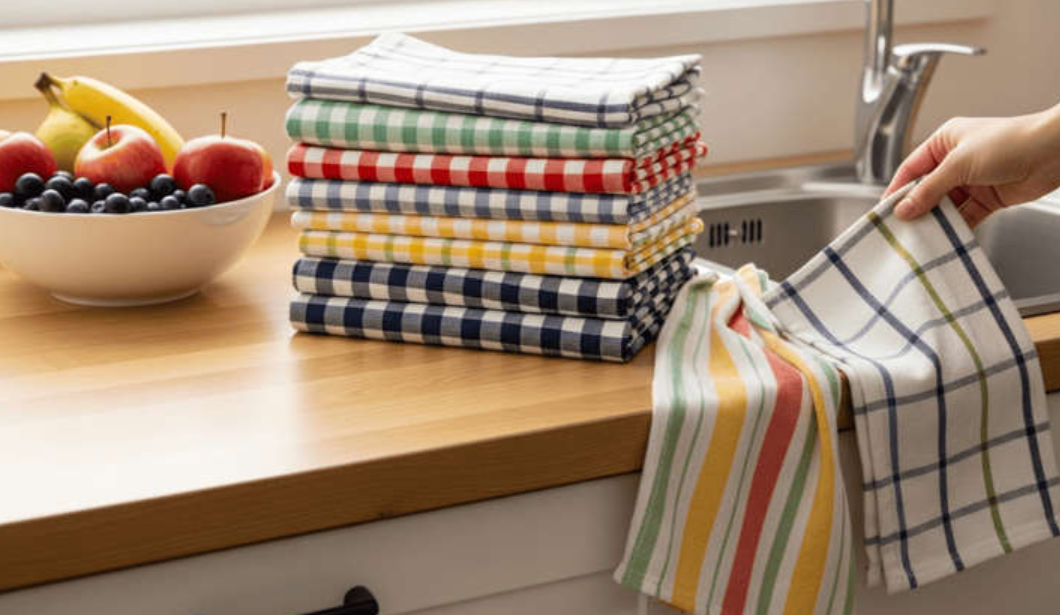
A kitchen towel rarely gets dirty all at once. Day after day, it soaks up drops of oil, smears of sauce, dampness from our hands, and splatters from the stove. At first, it seems easy enough to toss it in the wash. But over time, the fabric starts to look dingy, loses its fresh feel, and those familiar yellow stains refuse to budge.
For a long time, I thought stained kitchen towels were a lost cause and mentally demoted them to floor-rag duty. Then a pantry staple made me reconsider. Sometimes a towel doesn’t need harsh treatment — it just needs the right soak.
Why Grease Stains Linger on Kitchen Towels
Grease doesn’t dissolve easily in cold water. It works its way into cotton fibers, mixes with dust and other residue, and gradually oxidizes. That’s why a fresh cooking-oil stain is much easier to remove than one that has been sitting in the fabric for weeks.
Regular laundry detergent doesn’t always do the job, especially in a short, cool wash cycle. The towel may look cleaner when it comes out of the washer, only for the stains to reappear once it’s dry. It can feel as if the grease has become part of the fabric.
That’s when many of us turn to boiling laundry, strong bleach, or generous amounts of dish soap. But getting grease out of kitchen towels doesn’t always require drastic measures. Frequent boiling can make cotton rough and wear down the fibers, while colored towels may fade quickly.
Why I Use Dry Mustard Powder for Laundry
Dry mustard is more than a cooking ingredient. It has long been used around the home to wash dishes, clean sticky jars, and freshen sturdy kitchen linens. Mixed with warm water, it creates a solution that can help loosen greasy residue from fabric.
Mustard powder isn’t a powerful bleach, and this method avoids the repeated boiling that can leave cotton stiff and worn. I like it as a simple option for cleaning cotton towels without the strong smell of chlorine-based products.
I tried it on a towel that had been sitting in the laundry hamper after a day of frying. It had old oil and fish stains, and a regular wash had barely made a difference. After soaking, the marks looked noticeably lighter. A machine wash afterward left the fabric much cleaner and softer.
How to Make a Mustard Soak for Kitchen Towels
You’ll need:
⦁ 2 tablespoons dry mustard powder
⦁ 1 cup warm water, to mix with the powder
⦁ 5 quarts water at about 120–140°F
⦁ A basin or bucket large enough to fully submerge the towels
- Shake out the towel. If you can, rinse it with warm water to remove loose dust and residue.
- In a separate cup, stir the mustard powder into 1 cup of warm water until smooth.
- Pour the mixture into a basin containing 5 quarts of water at about 120–140°F. The water should be hot but not scalding.
- Submerge the towels and spread them out so the solution reaches the stained areas.
- Let them soak for 2–3 hours. If the fabric is thick or the stains are old, gently squeeze the towels in the water after about an hour.
- Wash the towels in your washing machine with your usual detergent, following the care label.
- This is a useful approach if you’re looking for a way to treat old grease stains without boiling your laundry. Wash white cotton towels at the temperature recommended on the care label. Wash colored towels separately and avoid using water that’s too hot.
Which Towels Can Be Soaked in Mustard?
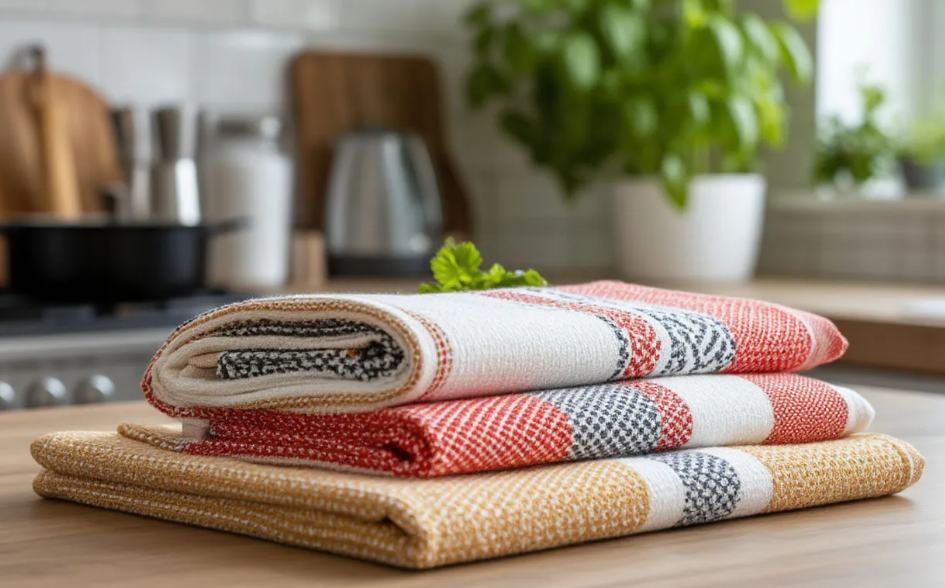
Mustard solution is best suited to white or light-colored cotton towels, waffle-weave kitchen towels, sturdy linen, and cotton dishcloths. These fabrics often pick up visible stains from cooking oil, tomato sauce, meat juices, and greasy broth.
Take extra care with brightly colored fabrics. Mustard doesn’t usually cause significant fading, but dyes can react unpredictably. I always test the solution on a hidden corner or an old towel first, especially if I’m treating a favorite piece.
Don’t use this method on wool, silk, rayon, or fabrics with delicate finishes. These materials require different temperatures and gentler products. And never mix mustard with bleach, chlorine-based cleaners, or vinegar. Combining cleaners won’t make the treatment more effective, and it could lead to an unpleasant smell or an unexpected result.
What to Do About Very Old Oil Stains
One soak may not be enough for a stain that has darkened over time. That’s normal: grease can oxidize, mix with dust, and gradually change color. It’s better to repeat the soak a few days later than to spend hours boiling a towel in a pot.
Before the second soak, you can apply a little paste made from mustard powder and warm water to the most stubborn spots. There’s no need to scrub hard with a brush. Spread the paste over the stain, let it sit for 15–20 minutes, and then soak the whole towel.
Drying matters, too. Don’t put the towel on a radiator or a hot towel warmer until you’re sure the stain is gone. Heat can set any remaining residue. Check the damp fabric in natural light and repeat the treatment if needed.
How to Keep Kitchen Towels from Getting Worn Out
The best habit is to change kitchen towels often, before they start to smell greasy. When I’m cooking a lot, I keep several towels handy: one for drying my hands, another for dishes, and a separate one for handling warm cookware. This helps prevent grease and moisture from building up in the same towel.
Avoid using a kitchen towel to wipe a frying pan, clean up spilled oil, or cover greasy food. Paper towels are a better choice for those jobs. The less grease that gets into the fibers, the easier it is to keep your kitchen towels bright and fresh-smelling.
A mustard soak doesn’t replace regular laundry, but it can help revive towels that seem past saving. It’s an inexpensive, easy way to freshen kitchen linens without boiling them, using harsh cleaners, or spending extra money.
What home remedies do you use to get your kitchen towels clean again?