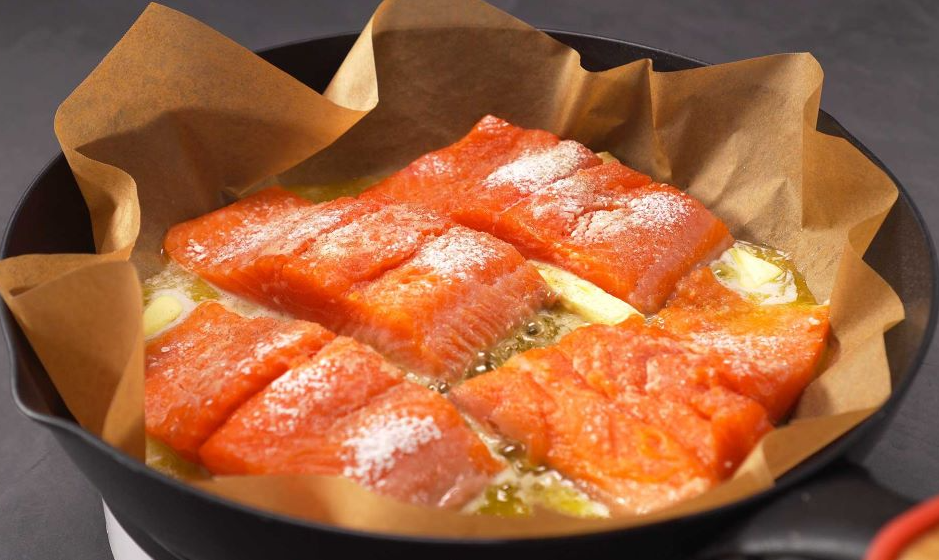
Frying an egg shouldn’t ruin your morning. But when the white sticks to the pan, the yolk breaks, and breakfast leaves you with a stubborn mess to scrub, even a simple meal can become frustrating.
I used to think the only solution was to buy a new pan. Then I discovered an easy workaround: a sheet of parchment paper can help keep delicate foods from sticking, make them easier to flip, and simplify cleanup.
Why Food Starts Sticking to a Pan
Even a good nonstick pan can lose its effectiveness over time. Its surface may develop tiny scratches, worn spots, or other damage that makes foods like eggs, cheese, fish, and pancakes more likely to stick.
Overheating can make the problem worse. Leaving an empty pan over high heat for too long may damage its nonstick coating. Plunging a hot pan into cold water can also cause thermal shock, which may warp the pan or shorten its lifespan.
But sticking isn’t only a problem with older cookware. Food can stick to a new pan if it’s heated improperly or used with too little oil. Stainless steel, cast iron, and aluminum pans may not have a nonstick coating at all — but that doesn’t mean you can’t cook delicate foods in them.
The Parchment Paper Trick for a Nonstick Surface
Parchment paper creates a barrier between food and the hot pan. Most baking parchment is coated with silicone, which helps prevent food from sticking to baking sheets — and can be useful for cooking certain foods in a skillet, too.
This parchment paper cooking trick works especially well for delicate fish, eggs, omelets, pancakes, fritters, and foods like pierogi that you want to brown without sticking. The food is easier to turn, and the pan is often much simpler to clean afterward.
Make sure you use parchment paper, not wax paper. Wax paper is designed for wrapping and food prep, not direct heat; its coating can melt or smoke. Check the package to confirm that the parchment is oven-safe and follow the manufacturer’s temperature limit. Many brands are rated for temperatures around 400–425°F, but the exact limit varies.
How to Cook with Parchment Paper in a Skillet
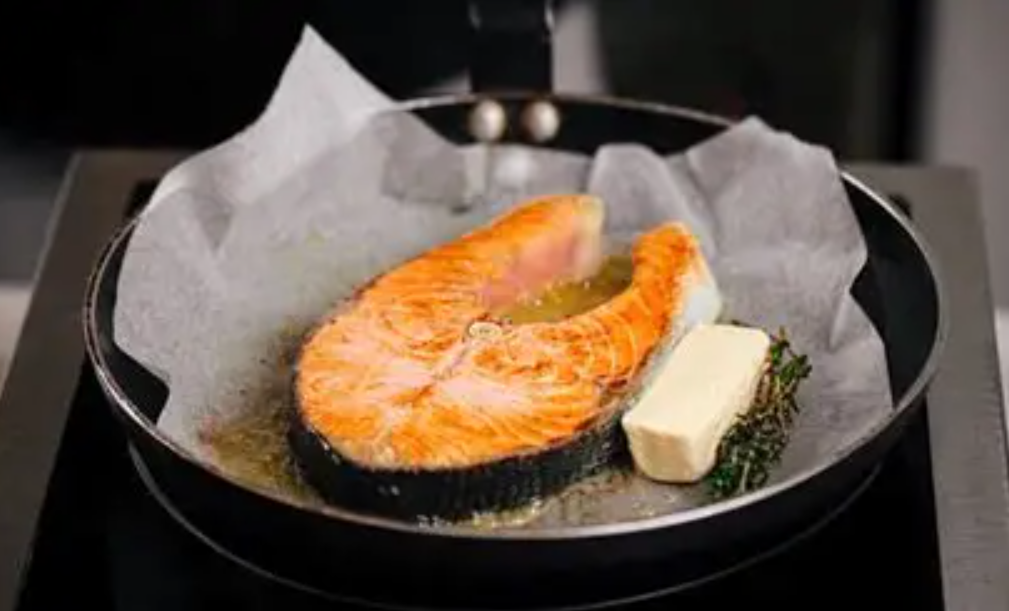
- Cut a piece of parchment paper to fit the bottom of your pan. It should lie flat, without tall folds or edges sticking far above the rim.
2. Set the pan over medium or medium-low heat and let it warm slightly.
3. Place the parchment in the pan. If you like, lightly brush the top with a little cooking oil.
4. Add the food and cook as directed, keeping an eye on the heat.
For fried eggs, just a few drops of oil spread over the parchment with a pastry brush or paper towel are usually enough. Some cooks lightly oil both sides of the paper to help it sit flat, but there’s no need to use much — the extra oil won’t make the food more nonstick.
Don’t heat an empty sheet of parchment for a long time, and don’t use this method over high heat. Parchment isn’t a replacement for the pan, and it’s not suitable for high-heat searing. For a steak that needs a deep, hard sear, cook it directly in a properly heated pan instead.
Can You Use Parchment Paper in Different Types of Pans?
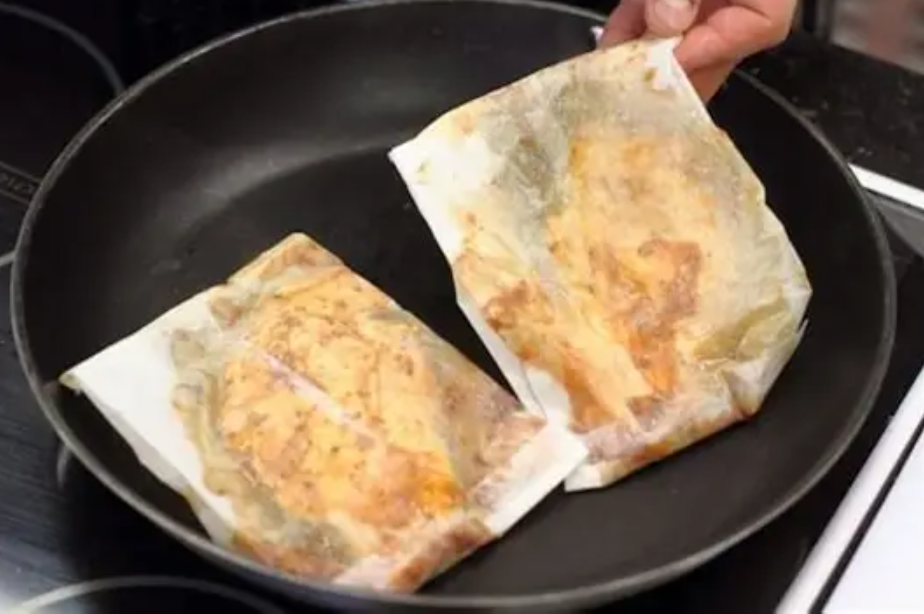
You can use parchment paper in stainless steel, cast iron, and aluminum skillets, as well as in pans whose nonstick coating is still intact but no longer working as well. It’s a handy option if you want to cook without a nonstick pan.
In a cast-iron skillet, parchment can make delicate foods — such as thin pancakes or white fish fillets — easier to flip. It can also help reduce the amount of residue left behind after cooking.
Parchment is useful in stainless steel pans, too, especially if you’re still getting used to preheating them. Stainless steel requires proper temperature control: food added to a pan that isn’t hot enough may stick. A sheet of parchment can make cooking delicate ingredients less stressful.
However, parchment paper does not make a damaged nonstick pan safe to use. If the coating is peeling, flaking, or deeply scratched, replace the pan. Parchment can help with cooking and cleanup, but it can’t repair a deteriorating surface.
Foods That Cook Well on Parchment
This method is especially useful when you want to use less oil and keep delicate foods in one piece. Try it for:
⦁ Fried or scrambled eggs
⦁ Fish fillets
⦁ Chicken breast
⦁ Zucchini fritters
⦁ Cottage cheese pancakes
⦁ Omelets and thin pancakes
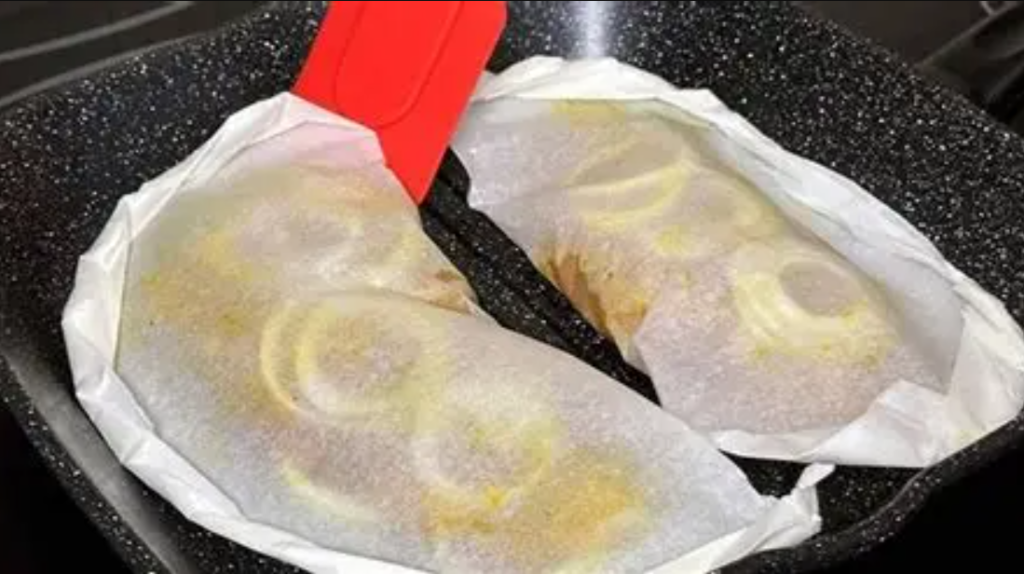
Parchment can also help prevent fish skin from sticking to the pan. As a bonus, it may make cleanup easier and keep fish residue from clinging to the cookware.
Pat wet ingredients dry with a paper towel before cooking. If meat, fish, or vegetables are covered in water, they’re more likely to steam than brown. Season them as your recipe directs, then place them on the warmed parchment.
How to Make Your Pan Last Longer
A few simple habits can help protect your cookware and reduce sticking:
⦁ Don’t leave an empty pan over high heat.
⦁ Use wooden, silicone, or heat-resistant plastic utensils with nonstick cookware.
⦁ Let a hot pan cool before washing it; avoid rinsing it under cold water.
⦁ Clean the pan with a soft sponge rather than an abrasive scrubber.
⦁ Soak stuck-on food in warm water for a few minutes instead of scraping aggressively.
Parchment paper won’t make an old pan new again, but it can help you cook delicate foods with less sticking, use less oil, and spend less time scrubbing. Sometimes the simplest kitchen trick is the one you reach for most often.
Have you tried cooking with parchment paper in a skillet?